Science has shown us that prolonged stress can affect the way our nervous system functions.
Our nervous system is designed to move between states of activation and rest, so that we can respond to 'threat' but then come back down again into calm.
Thousands of years ago, our systems worked well and have ensured our survival as a species. Now however, we experience continuous, ongoing stresses that leave us spending too much time in a heightened state of alert and not enough time in the restorative state our body needs.
This stuck response means we are constantly dysregulated by seemingly innocuous things, such as waking up in the morning and turning on our phone. Immediate email and text overload ensues, negative news, targeted social media knowing just what buttons to press to make us spend money (hmm, I guess this could be one of those things too - but at least in a good way!). We're even worrying about the weather, a national pastime of the British that is no longer just passing chat.
This leaves us feeling wired but tired, unable to switch off, tense, overwhelmed, anxious, emotionally drained or disconnected from our body.
This is nervous-system dysregulation. And the longer this continues, the more familiar that state can become. It starts to feel like this is normal and we just put up with it.
The good news is that there are practical, science-informed ways we can support our nervous system and help bring us out of nervous system dysregulation.
So, What Can You Do From Home?
There are simple techniques you can use when you notice yourself becoming overwhelmed or stuck in your head.
Try a physiological sigh: Take a full breath in through your nose, then take a second, smaller breath in, pause, then slowly breathe out through your mouth. Repeat a few times. Cyclic sighing has been studied for its effects on physiological arousal and mood.
Slow your breathing: Gentle, slower breathing, with the focus on longer exhalations influence the autonomic nervous system and has been associated with increased heart-rate variability and reduced stress.
Bring your attention into your senses: Rather than continuing to follow your thoughts, notice what you can see, hear and physically feel. This can help shift your attention away from mental overactivity and back into the present moment.
Use gentle movement: Moving slowly and consciously can help you reconnect with your body rather than remaining caught up in your thoughts. This is something we need to remind ourselves about over and over. The motto is: slower is calmer.
Get outside: Stepping out into fresh air and nature helps pull your senses away from screens and noise. A short moment outside can signal safety to your nervous system and reduce overwhelm. But if you have time, I notice that it's after around 20 minutes in nature (without your phone) that the real 'drop-down' and relax feeling settles in.
Get off your phone: Not checking your phone in the evenings can significantly reduce stress and anxiety. If you want to do this, it's best to let people know in advance, so you can relax into it, and maybe give them an alternative contact in case of real need. This will give the mind the space it needs without feeling like you're missing something.
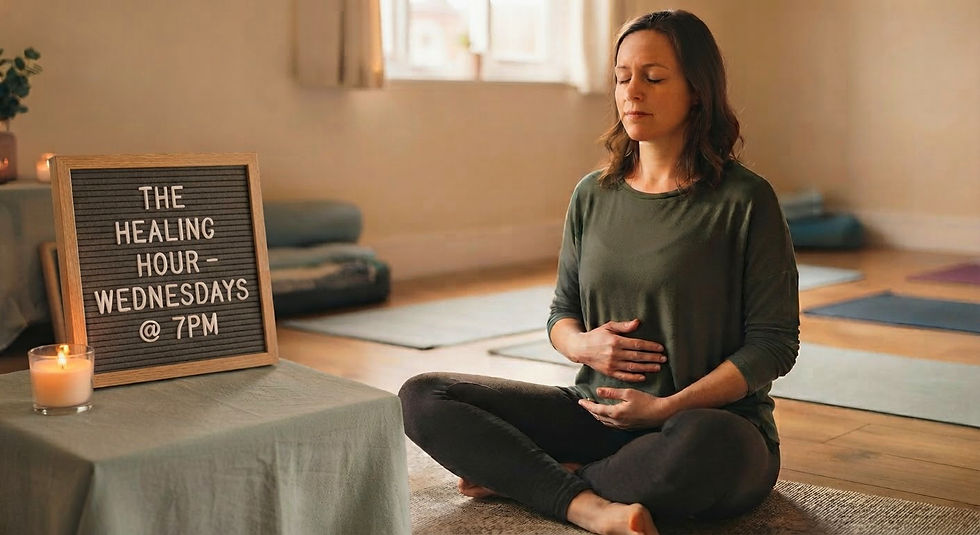
These are just a few of the practical tools I use and teach in the Healing Hour and can into in depth with people in my 1:1 sessions too.
Working With The Right Guidance Makes The Difference
For centuries, Western medicine has been influenced by the ideas of René Descartes, particularly the separation of mind and body, leading us to treat mental and physical health as two distinct things. This separation has shaped the way modern healthcare approaches illness, despite our growing understanding that mind and body are deeply interconnected.
Having worked in the wellbeing industry for over 15 years, with a background rooted in counselling, wellbeing coaching, yoga, somatic movement, and nervous system regulation, I’ve spent years learning how to help people settle both the body and the mind, watching carefully to understand how the two interact within each individual.
That is why I developed my signature SWAN Method: a unique hybrid approach bringing together trauma-informed therapy, coaching, and nervous system healing. For each person, this will look very different, since it's tailored to each their individual needs.
One of the reasons I love offering The Healing Hour is that it's been shaped by all of this experience, bringing it together into a one-hour class where you get to learn lots of ways to help yourself... whilst simply relaxing.
What to Expect?
We begin with around 20 minutes of pranayama and breathwork, including physiological sighs and other breathing techniques.
We then use a range of gentle, evidence-informed nervous-system and somatic practices, including eye gaze, ear massage, sweeping, Havening-inspired touch, grounding practices and body awareness.
This is followed by around 20 minutes of very gentle movement, and finish with 20 minutes of Yoga Nidra - a deeply restful guided relaxation practice that's heavily backed by science for its benefits.
So, although yoga is part of the Healing Hour, this isn't a yoga class.
It's an hour specifically created to help you work with your nervous system, using practical tools you can take away and use in everyday life.
You don't need any yoga experience. You don't need to be flexible. You don't need to know how to meditate.
THE HEALING HOUR
📍 Oxted URC, Surrey🕖 Wednesdays, 7–8pm
16th September
21st October (TBC as I'm moving home)
18th November
16th December
Bring a yoga mat if you have one, but don't worry if you don't have one that's ok, just let me know.
Come and learn how to settle your body, quieten your mind, and drop into a deeper, calmer presence.. telling your nervous system you are safe and you can let go 🤍

